Field Guide
LifeWave X39 for Athletic Recovery
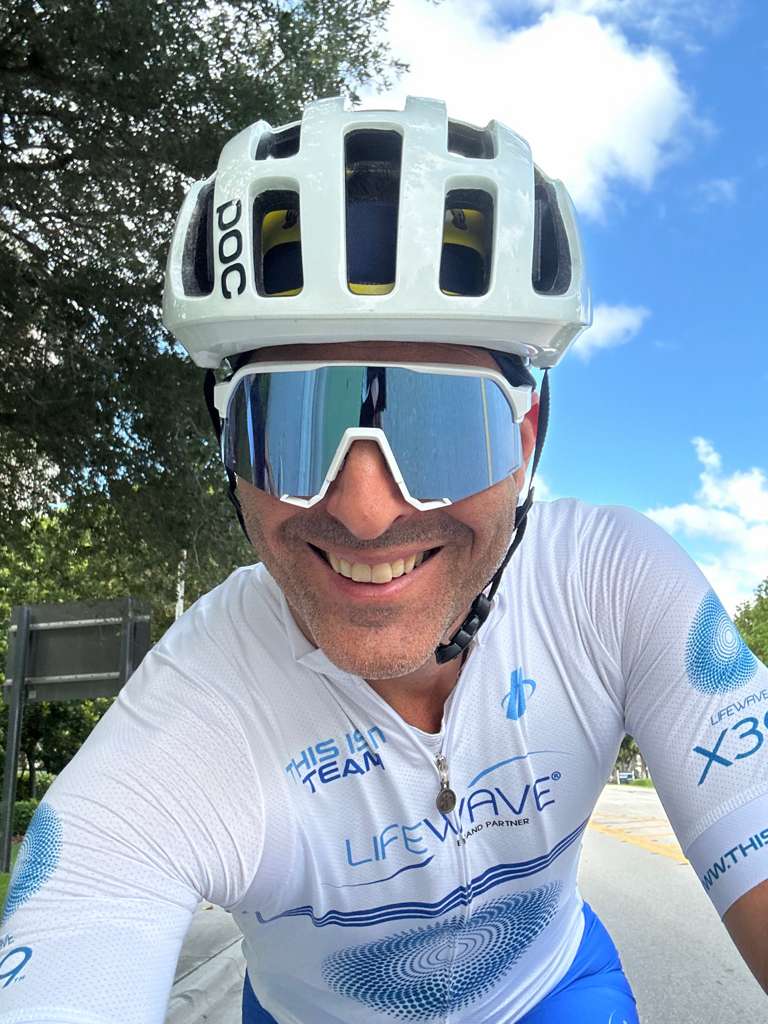
By Ian Farrar · elite cyclist & LifeWave Brand Partner
Recovery is the training block most athletes underinvest in. You can only adapt to the load your body can absorb — and that adaptation happens in sleep, in soft-tissue repair, and in the low-grade inflammation you resolve between sessions. The LifeWave X39 phototherapy patch is a small, drug-free tool that targets exactly that layer.
Why athletes care about GHK-Cu
GHK-Cu is a naturally occurring copper peptide your body produces to signal tissue repair. Circulating levels drop sharply after age 20 and are further depleted by heavy training loads, chronic stress, and poor sleep. In the peer-reviewed literature, GHK-Cu is linked to accelerated wound healing, collagen and elastin synthesis, anti-inflammatory signaling, and skin regeneration — the same repair pathways an athlete leans on every night.
X39 does not inject GHK-Cu. It uses specific wavelengths of reflected light to signal the body to elevate GHK-Cu naturally. Nothing crosses the skin. That's why the patch sits outside doping-control concerns and why it stacks cleanly with any nutrition or training protocol.
The three recovery levers X39 supports
- Deeper sleep. Most athletes feel this first — within the first 7–14 days. Deeper sleep is where growth hormone pulses, glycogen resynthesis, and neural recovery happen.
- Soft-tissue repair. Elevated GHK-Cu signaling supports collagen and elastin turnover — the connective-tissue substrate that separates athletes who train through their 40s and 50s from those who don't.
- Inflammation resolution. Not blocking inflammation — resolving it. That is the adaptation window. Chronic unresolved inflammation is what keeps you feeling flat weeks after a big block.
My daily athlete protocol
This is what I run through cycling season. Simple, consistent, boring — the way recovery should be.
- Morning, on waking: one fresh X39 patch on the back of the neck (GV14) or inside of the forearm. Clean, dry skin.
- All-day wear: up to 12 hours. Remove before bed — the sleep benefit is cumulative and doesn't require overnight use.
- Training days & rest days: both. Don't skip on rest days — the adaptation you're chasing happens on those days.
- Hard blocks: stack with an evening walk, protein at every meal, and a hard 9 pm phone cutoff. X39 amplifies the basics; it doesn't replace them.
Detailed placement map, timing, and troubleshooting →
What to expect, week by week
Week 1–2: deeper, less-broken sleep. Waking clearer.
Week 2–4: perceived recovery improves. DOMS resolves a day earlier. Consistent morning energy.
Week 4–12: nagging soft-tissue issues quiet down. Training load tolerance climbs. The little things — grip, hair, skin, mood — all trend up because the same repair signal touches all of them.
Is it right for you?
If you are training hard, competing, or coming back from injury and your recovery is the limiter — this is the cleanest, lowest-risk tool I know. No needles, no drugs, no metabolites. Just a daily patch, a repair signal your body already knows how to use, and the discipline to give it 90 days.
FAQ
Does the LifeWave X39 patch actually help with athletic recovery?
Athletes report faster recovery between hard sessions, deeper sleep, and less next-day soreness. The proposed mechanism is elevated GHK-Cu — a naturally occurring copper peptide involved in tissue repair, collagen synthesis, and inflammation resolution. X39 is a phototherapy patch: it reflects specific wavelengths of infrared and visible light back into the skin. Nothing enters the body.
Is LifeWave X39 legal for competitive athletes?
X39 is a light-reflecting patch — it contains no drugs, no hormones, and no injected peptides, so there is nothing to be absorbed or metabolized. It is not on the WADA prohibited list. Elite and pro athletes across cycling, triathlon, MMA, and endurance sports have used LifeWave patches for over a decade. Always confirm with your governing body before competition.
How does GHK-Cu support recovery?
GHK-Cu is a three-amino-acid copper peptide that declines sharply with age and after intense physical stress. Published research links GHK-Cu to accelerated wound healing, collagen and elastin production, anti-inflammatory signaling, and improved skin regeneration. For athletes this translates to the systems that matter most between sessions: tissue repair, connective-tissue integrity, and sleep-driven recovery.
When should I wear the patch for training?
Apply one fresh X39 patch each morning on clean, dry skin — most athletes use the back of the neck (GV14 point) or the inside of the forearm. Leave it on for up to 12 hours. Best-in-class results come from consistent daily use for at least 30–90 days, not just on training days.
What results should a serious athlete expect?
Weeks 1–2: deeper, more restorative sleep. Weeks 2–4: better perceived recovery, less DOMS, more consistent energy. Weeks 4–12: cumulative gains in tissue repair, soft-tissue niggles resolving faster, and steadier training load tolerance. Results vary; nutrition, sleep, and training discipline still do most of the work — X39 supports the underlying signaling.
Order X39
$150/month for 30 patches. Order direct from LifeWave through my Brand Partner link.
Order X39 NowHave questions? Get a free 1-on-1 consult.
Drop your email and your question. We'll reply personally — no obligation, no sales pitch.
Sources & footnotes
- [1] Pickart L. & Margolina A. "GHK Peptide as a Natural Modulator of Multiple Cellular Pathways in Skin and Connective Tissue." Oxidative Medicine and Cellular Longevity, 2018. PMC6073405. View source →
- [2] Pickart L. "The Human Tri-Peptide GHK and Tissue Remodeling." J. Biomaterials Science, Polymer Ed., 2008. PMID 18534094. View source →
- [3] Schmidt D. US Patent 10,232,184: Phototherapy Device for Enhancing Stem Cell Activity (USPTO). View source →
* Individual results may vary. User-reported experiences are not guaranteed outcomes. These statements have not been evaluated by the FDA. Not intended to diagnose, treat, cure, or prevent any disease.
Not medical advice. Consult your physician for medical questions. Individual results vary.