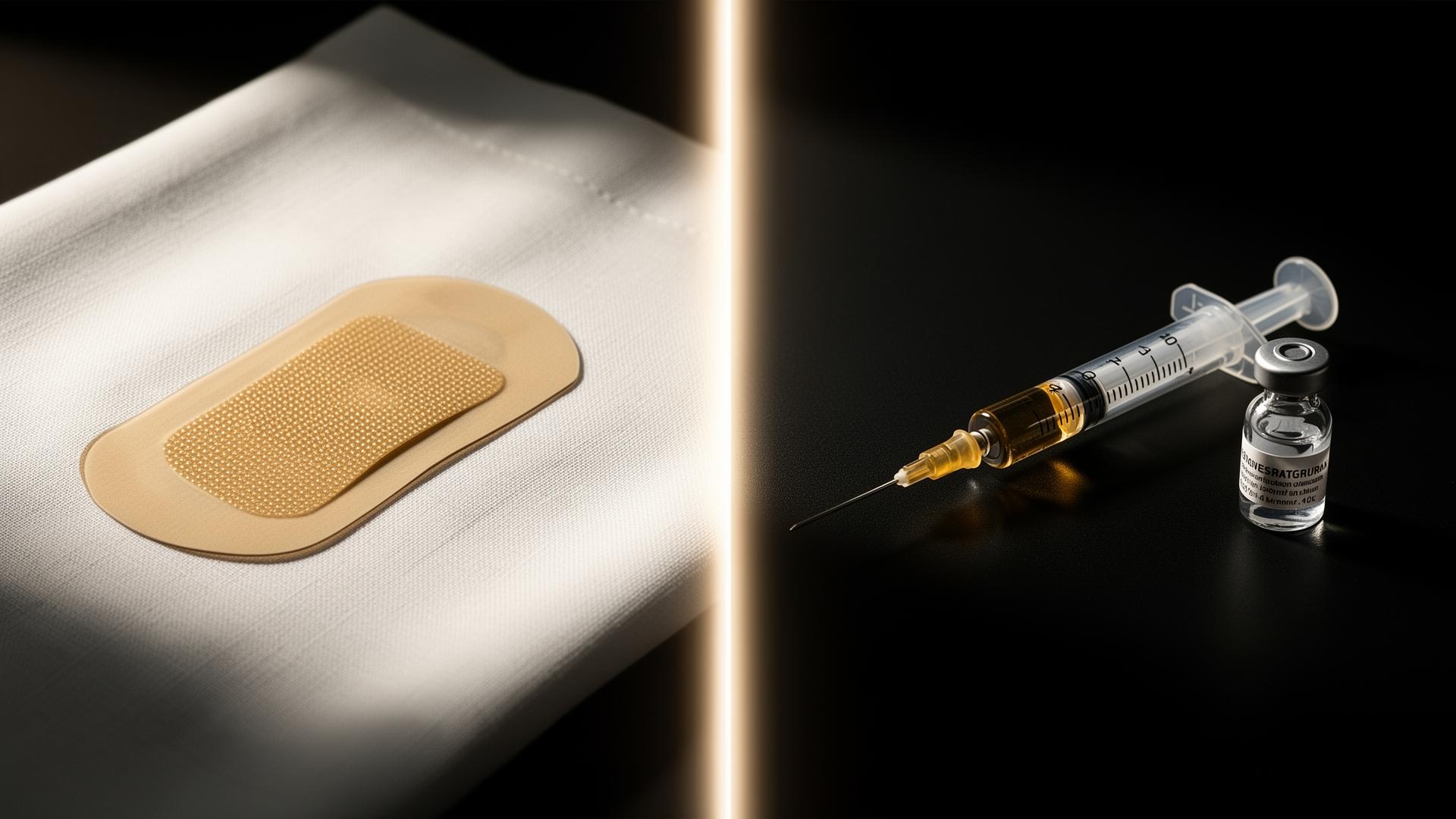
Comparison
LifeWave X39 vs Peptide Injections
Both aim to support elevated GHK-Cu and other repair-associated peptides. One uses a needle and a prescription. The other uses light and a patch. Here's the honest breakdown.
| Factor | LifeWave X39 | Peptide Injections |
|---|---|---|
| Monthly cost | ~$150 | $200–$600+ |
| Delivery | Wearable patch | Subcutaneous injection |
| Prescription needed | No | Yes (or gray market) |
| Onset | 2–4 weeks | 1–3 weeks |
| Needles / infection risk | None | Yes |
| Enters bloodstream | No (phototherapy signal) | Yes |
| FDA status | Class I registered | Most are compounded, not FDA-approved |
| Travel friendly | Yes | Vials, syringes, cold chain |
When injections make more sense
If you're under a longevity physician's care, want a specific peptide stack (BPC-157, TB-500, CJC/Ipamorelin), and have the budget — injections give you precise dosing and a faster pharmacokinetic curve.
When X39 makes more sense
If you want daily anti-aging support without needles, prescriptions, or a $5,000+ annual cost — X39 is the most accessible peptide-signaling protocol available. Many users start with X39 to validate the response, then add injections later if they want to escalate.
The combination protocol
Most longevity-focused users we've spoken to use X39 daily as the maintenance layer and reserve injections for targeted cycles (post-injury, pre-competition, or seasonal). You don't have to choose.